
Topic: ToolsWord 1 of 43
axe Meaning in Korean (axe 영어 뜻)
noun · verbnoun
도끼
verb해고하다, 삭감하다
유의어:자귀벌목용 도끼
도끼 in English:axe
IPA:tokki
Plural: axes
Quick Answer • 요약
Axe의 한국어 뜻은 도끼, 해고하다, 삭감하다입니다. (주로 나무를 자르는 데 사용되는, 손잡이에 부착된 무거운 금속 날을 가진 도구.)
Concept Illustration
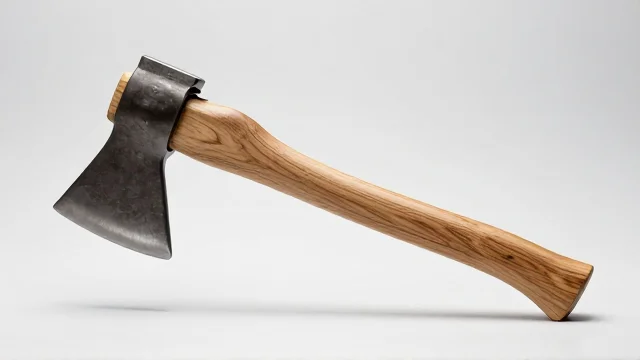
Visual representation of "axe"
Definitions of Axe
- 1도끼noun
An axe is a tool with a heavy metal blade attached to a handle, primarily used for chopping wood.
주로 나무를 자르는 데 사용되는, 손잡이에 부착된 무거운 금속 날을 가진 도구. - 2해고하다, 삭감하다verb
To axe means to abruptly dismiss or remove someone from a job, or to drastically reduce a budget or project.
직장에서 누군가를 갑자기 해고하거나 제거하는 것, 또는 예산이나 프로젝트를 대폭 줄이는 것.
Example Sentences
“He used an axe to chop down the old tree in his backyard.”
그는 뒷마당의 오래된 나무를 베기 위해 도끼를 사용했다.
“The company decided to axe several projects due to unexpected budget cuts.”
회사는 예상치 못한 예산 삭감으로 인해 여러 프로젝트를 중단하기로 결정했다.
Topics & Categories
Topic & ExploreInflected Word Forms
past tenseaxed
past participleaxed
present participleaxing
agent nounaxeman
Phrases & Idiomatic Expressions
have an axe to grindidiom
To have a private reason for being angry or for complaining.
Frequently Asked Questions: Axe in Korean
What is the meaning of Axe in Korean?▼
Axe의 한국어 뜻은 도끼, 해고하다, 삭감하다입니다. (주로 나무를 자르는 데 사용되는, 손잡이에 부착된 무거운 금속 날을 가진 도구.)
How do you translate 'Axe' to Korean?▼
'Axe' translates to '도끼' in Korean. Axe의 한국어 뜻은 도끼, 해고하다, 삭감하다입니다. (주로 나무를 자르는 데 사용되는, 손잡이에 부착된 무거운 금속 날을 가진 도구.)
What is '도끼' called in English?▼
'도끼' in English is called "Axe". Axe refers to: 주로 나무를 자르는 데 사용되는, 손잡이에 부착된 무거운 금속 날을 가진 도구.
How do you pronounce 'Axe' and '도끼'?▼
Listen to clear English audio pronunciation of 'Axe' (IPA: /tokki/) and native Korean audio speech for '도끼' with bilingual sentence examples on DictBridge.
What is an example sentence for Axe in Korean?▼
English: "He used an axe to chop down the old tree in his backyard." | Korean: "그는 뒷마당의 오래된 나무를 베기 위해 도끼를 사용했다."
Related Words in Tools
Explore contextually related English vocabulary with verified Korean meanings, pronunciations, and sentence usages: