
Topic: Natural ElementsWord 4 of 53
clay Meaning in Korean (clay 영어 뜻)
noun점토
유의어:흙진흙
점토 in English:clay
IPA:t͡ɕʌmtʰo
Quick Answer • 요약
Clay의 한국어 뜻은 점토입니다. (점토는 일반적으로 노란색, 빨간색 또는 회청색을 띠는 뻣뻣하고 끈적이는 미세 입자 흙으로, 종종 토양에서 불투수층을 형성합니다.)
Concept Illustration
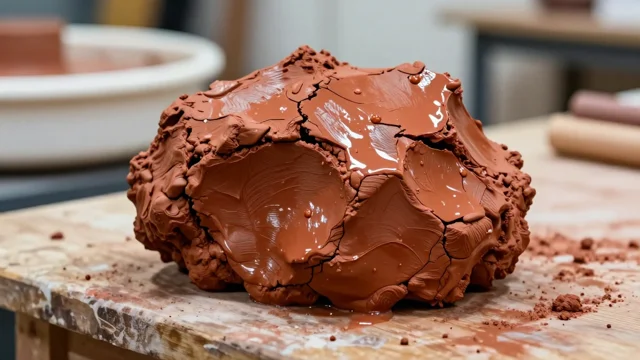
Visual representation of "clay"
Definitions of Clay
Example Sentences
Topics & Categories
Topic & ExploreInflected Word Forms
nounclayware
adjectiveclayey
Phrases & Idiomatic Expressions
feet of clayidiom
A fundamental weakness or flaw in an otherwise strong or impressive person or thing.
Frequently Asked Questions: Clay in Korean
What is the meaning of Clay in Korean?▼
Clay의 한국어 뜻은 점토입니다. (점토는 일반적으로 노란색, 빨간색 또는 회청색을 띠는 뻣뻣하고 끈적이는 미세 입자 흙으로, 종종 토양에서 불투수층을 형성합니다.)
How do you translate 'Clay' to Korean?▼
'Clay' translates to '점토' in Korean. Clay의 한국어 뜻은 점토입니다. (점토는 일반적으로 노란색, 빨간색 또는 회청색을 띠는 뻣뻣하고 끈적이는 미세 입자 흙으로, 종종 토양에서 불투수층을 형성합니다.)
What is '점토' called in English?▼
'점토' in English is called "Clay". Clay refers to: 점토는 일반적으로 노란색, 빨간색 또는 회청색을 띠는 뻣뻣하고 끈적이는 미세 입자 흙으로, 종종 토양에서 불투수층을 형성합니다.
How do you pronounce 'Clay' and '점토'?▼
Listen to clear English audio pronunciation of 'Clay' (IPA: /t͡ɕʌmtʰo/) and native Korean audio speech for '점토' with bilingual sentence examples on DictBridge.
What is an example sentence for Clay in Korean?▼
English: "The potter molded the clay into a beautiful vase." | Korean: "도공은 점토로 아름다운 꽃병을 만들었습니다."
Related Words in Natural Elements
Explore contextually related English vocabulary with verified Korean meanings, pronunciations, and sentence usages: