
dust Meaning in Portuguese (dust significado em português)
noun · verbO significado de Dust em português é pó, tirar o pó, polvilhar. (Pó refere-se a partículas finas e secas de terra ou outra matéria, frequentemente encontradas em superfícies ou suspensas no ar.)
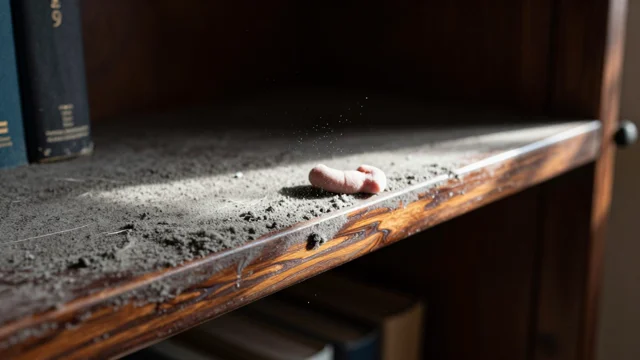
Definitions of Dust
- 1pónoun
Dust refers to fine, dry particles of earth or other matter, often found on surfaces or suspended in the air.
Pó refere-se a partículas finas e secas de terra ou outra matéria, frequentemente encontradas em superfícies ou suspensas no ar. - 2tirar o póverb
To dust means to remove small particles of dirt or powder from a surface by wiping or brushing it.
Tirar o pó significa remover pequenas partículas de sujeira ou pó de uma superfície, limpando-a ou escovando-a. - 3polvilharverb
To dust can also mean to lightly cover something with a powdered substance, such as sugar or flour.
Polvilhar também pode significar cobrir levemente algo com uma substância em pó, como açúcar ou farinha.
Example Sentences
“The old books were covered in a thick layer of dust.”
Os livros antigos estavam cobertos por uma espessa camada de pó.
“She needs to dust the shelves every week to keep them tidy.”
Ela precisa tirar o pó das prateleiras toda semana para mantê-las arrumadas.
“He dusted the cake with powdered sugar before serving it.”
Ele polvilhou o bolo com açúcar de confeiteiro antes de servi-lo.
Topics & Categories
Topic & ExploreInflected Word Forms
Phrases & Idiomatic Expressions
To fail completely or to die.
To use something again after a long period of disuse.
A quarrel or fight.
Frequently Asked Questions: Dust in Portuguese
What is the meaning of Dust in Portuguese?▼
How do you translate 'Dust' to Portuguese?▼
What is 'pó' called in English?▼
How do you pronounce 'Dust' and 'pó'?▼
What is an example sentence for Dust in Portuguese?▼
Related Words in Natural Elements
Explore contextually related English vocabulary with verified Portuguese meanings, pronunciations, and sentence usages: