
donkey Meaning in Japanese (donkey 英語 意味)
nounロバ, 愚か者
ロバ in English:donkey
IPA:ˈdɔŋki
Plural: donkeys
Quick Answer • 要約
Donkey の日本語の意味は「ロバ, 愚か者」です。 (馬科の家畜化された有蹄哺乳類で、長い耳と鳴き声を持ち、一般的に荷役動物として使用される。)
Concept Illustration
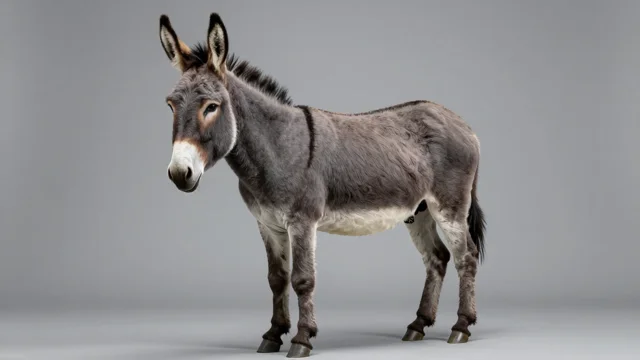
Visual representation of "donkey"
Definitions of Donkey
Example Sentences
Antonyms (対義語)
In Japanese:
賢者
Topics & Categories
Topic & ExploreInflected Word Forms
pluraldonkeys
possessivedonkey's
adjectivedonkeyish
Phrases & Idiomatic Expressions
donkey's yearsidiom
A very long time.
stubborn as a donkeyexpression
Extremely obstinate or unyielding.
Frequently Asked Questions: Donkey in Japanese
What is the meaning of Donkey in Japanese?▼
Donkey の日本語の意味は「ロバ, 愚か者」です。 (馬科の家畜化された有蹄哺乳類で、長い耳と鳴き声を持ち、一般的に荷役動物として使用される。)
How do you translate 'Donkey' to Japanese?▼
'Donkey' translates to 'ロバ' in Japanese. Donkey の日本語の意味は「ロバ, 愚か者」です。 (馬科の家畜化された有蹄哺乳類で、長い耳と鳴き声を持ち、一般的に荷役動物として使用される。)
What is 'ロバ' called in English?▼
'ロバ' in English is called "Donkey". Donkey refers to: 馬科の家畜化された有蹄哺乳類で、長い耳と鳴き声を持ち、一般的に荷役動物として使用される。
How do you pronounce 'Donkey' and 'ロバ'?▼
Listen to clear English audio pronunciation of 'Donkey' (IPA: /ˈdɔŋki/) and native Japanese audio speech for 'ロバ' with bilingual sentence examples on DictBridge.
What is an example sentence for Donkey in Japanese?▼
English: "The farmer used his donkey to carry heavy loads to the market." | Japanese: "農夫はロバを使って重い荷物を市場に運んだ。"
Related Words in Common Animals
Explore contextually related English vocabulary with verified Japanese meanings, pronunciations, and sentence usages: