
donkey Meaning in Korean (donkey 영어 뜻)
noun당나귀, 바보
유의어:나귀우둔한 사람
당나귀 in English:donkey
IPA:taŋnaɡwi
Plural: donkeys
Quick Answer • 요약
Donkey의 한국어 뜻은 당나귀, 바보입니다. (말과에 속하는 길들여진 발굽 동물로, 긴 귀와 우는 소리가 특징이며 짐꾼으로 흔히 사용됩니다.)
Concept Illustration
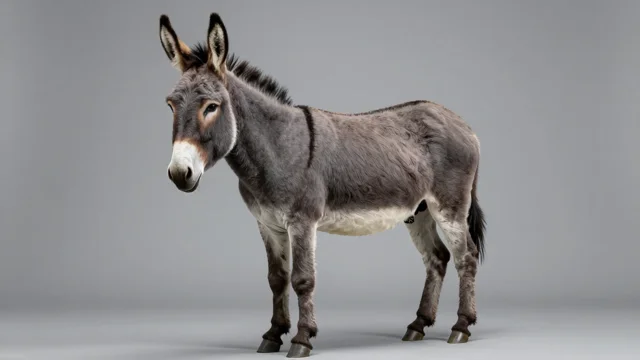
Visual representation of "donkey"
Definitions of Donkey
Example Sentences
Antonyms (반의어)
In Korean:
똑똑한 사람
Topics & Categories
Topic & ExploreInflected Word Forms
pluraldonkeys
possessivedonkey's
adjectivedonkeyish
Phrases & Idiomatic Expressions
donkey's yearsidiom
A very long time.
stubborn as a donkeyexpression
Extremely obstinate or unyielding.
Frequently Asked Questions: Donkey in Korean
What is the meaning of Donkey in Korean?▼
Donkey의 한국어 뜻은 당나귀, 바보입니다. (말과에 속하는 길들여진 발굽 동물로, 긴 귀와 우는 소리가 특징이며 짐꾼으로 흔히 사용됩니다.)
How do you translate 'Donkey' to Korean?▼
'Donkey' translates to '당나귀' in Korean. Donkey의 한국어 뜻은 당나귀, 바보입니다. (말과에 속하는 길들여진 발굽 동물로, 긴 귀와 우는 소리가 특징이며 짐꾼으로 흔히 사용됩니다.)
What is '당나귀' called in English?▼
'당나귀' in English is called "Donkey". Donkey refers to: 말과에 속하는 길들여진 발굽 동물로, 긴 귀와 우는 소리가 특징이며 짐꾼으로 흔히 사용됩니다.
How do you pronounce 'Donkey' and '당나귀'?▼
Listen to clear English audio pronunciation of 'Donkey' (IPA: /taŋnaɡwi/) and native Korean audio speech for '당나귀' with bilingual sentence examples on DictBridge.
What is an example sentence for Donkey in Korean?▼
English: "The farmer used his donkey to carry heavy loads to the market." | Korean: "농부는 당나귀를 이용해 시장에 무거운 짐을 날랐습니다."
Related Words in Common Animals
Explore contextually related English vocabulary with verified Korean meanings, pronunciations, and sentence usages: