
Topic: FruitsWord 25 of 38
orange Meaning in Japanese (orange 英語 意味)
noun · adjectivenoun
オレンジ
adjectiveオレンジ色
オレンジ in English:orange
IPA:oˈɾeɲd͡ʑi
Quick Answer • 要約
Orange の日本語の意味は「オレンジ, オレンジ色」です。 (赤みがかった黄色で、丸く甘い柑橘系の果物。厚い皮とジューシーな果肉を持つ。)
Concept Illustration
Senses (2):
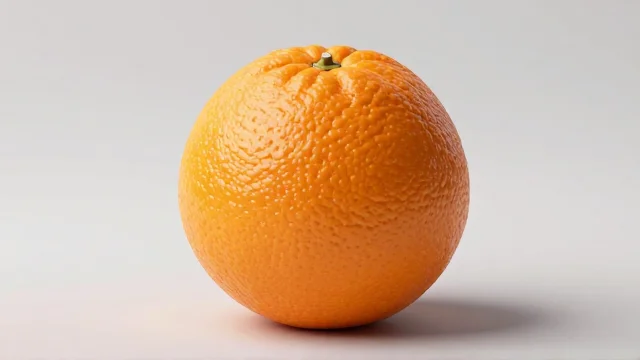
1 / 2
Visual representation 1 of "orange"
Definitions of Orange
- 1オレンジnoun
An orange is a round, sweet citrus fruit with a tough, bright reddish-yellow rind and juicy pulp.
赤みがかった黄色で、丸く甘い柑橘系の果物。厚い皮とジューシーな果肉を持つ。 - 2オレンジ色adjective
Orange describes a color that is a mixture of red and yellow, resembling the color of the fruit itself.
赤と黄色が混ざった色で、果物そのものの色に似ているさま。 - 3noun
Orange can also refer to the color itself, a hue between red and yellow in the visible spectrum.
赤と黄色の間の色相で、可視スペクトルにおける色の一つ。
Example Sentences
Topics & Categories
Topic & ExploreInflected Word Forms
adjectiveorangey
adjectiveorangish
Phrases & Idiomatic Expressions
orange juicecollocation
A beverage made by extracting liquid from the orange fruit.
orange blossomcollocation
The fragrant white flower of the orange tree.
orange peelcollocation
The rind or outer skin of an orange.
Frequently Asked Questions: Orange in Japanese
What is the meaning of Orange in Japanese?▼
Orange の日本語の意味は「オレンジ, オレンジ色」です。 (赤みがかった黄色で、丸く甘い柑橘系の果物。厚い皮とジューシーな果肉を持つ。)
How do you translate 'Orange' to Japanese?▼
'Orange' translates to 'オレンジ' in Japanese. Orange の日本語の意味は「オレンジ, オレンジ色」です。 (赤みがかった黄色で、丸く甘い柑橘系の果物。厚い皮とジューシーな果肉を持つ。)
What is 'オレンジ' called in English?▼
'オレンジ' in English is called "Orange". Orange refers to: 赤みがかった黄色で、丸く甘い柑橘系の果物。厚い皮とジューシーな果肉を持つ。
How do you pronounce 'Orange' and 'オレンジ'?▼
Listen to clear English audio pronunciation of 'Orange' (IPA: /oˈɾeɲd͡ʑi/) and native Japanese audio speech for 'オレンジ' with bilingual sentence examples on DictBridge.
What is an example sentence for Orange in Japanese?▼
English: "I love to eat fresh oranges in the morning." | Japanese: "朝に新鮮なオレンジを食べるのが大好きです。"
Related Words in Colors
Explore contextually related English vocabulary with verified Japanese meanings, pronunciations, and sentence usages: