
ferment Meaning in Japanese (ferment 英語 意味)
verb · nounverb
発酵する, 扇動する
noun動揺
発酵する in English:ferment
Phonetic:はっこうする
Quick Answer • 要約
Ferment の日本語の意味は「発酵する, 扇動する, 動揺」です。 (微生物(細菌、酵母など)によって物質が化学的に分解されること。通常、発泡や発熱を伴う。)
Concept Illustration
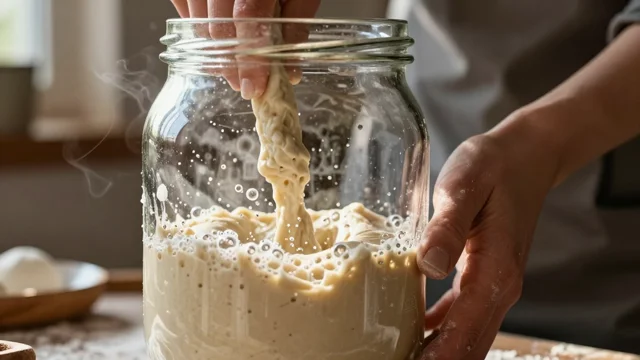
Visual representation of "ferment"
Definitions of Ferment
- 1発酵するverb
To undergo a chemical breakdown of a substance by bacteria, yeasts, or other microorganisms, typically involving effervescence and the giving off of heat.
微生物(細菌、酵母など)によって物質が化学的に分解されること。通常、発泡や発熱を伴う。 - 2扇動するverb
To incite or stir up trouble, disorder, or excitement within a group of people.
人々の集団の中で、問題、混乱、興奮などを引き起こしたり、かき立てたりすること。 - 3動揺noun
A state of agitation, excitement, or unrest, especially among a group of people.
特に人々の集団における、興奮、動揺、または騒乱の状態。
Example Sentences
Topics & Categories
Topic & ExploreInflected Word Forms
past tensefermented
present participlefermenting
nounfermentation
adjectivefermentable
Phrases & Idiomatic Expressions
in a fermentexpression
In a state of great excitement, agitation, or unrest.
ferment a revolutioncollocation
To incite or stir up a revolution.
Frequently Asked Questions: Ferment in Japanese
What is the meaning of Ferment in Japanese?▼
Ferment の日本語の意味は「発酵する, 扇動する, 動揺」です。 (微生物(細菌、酵母など)によって物質が化学的に分解されること。通常、発泡や発熱を伴う。)
How do you translate 'Ferment' to Japanese?▼
'Ferment' translates to '発酵する' in Japanese. Ferment の日本語の意味は「発酵する, 扇動する, 動揺」です。 (微生物(細菌、酵母など)によって物質が化学的に分解されること。通常、発泡や発熱を伴う。)
What is '発酵する' called in English?▼
'発酵する' in English is called "Ferment". Ferment refers to: 微生物(細菌、酵母など)によって物質が化学的に分解されること。通常、発泡や発熱を伴う。
How do you pronounce 'Ferment' and '発酵する'?▼
Listen to clear English audio pronunciation of 'Ferment' and native Japanese audio speech for '発酵する' with bilingual sentence examples on DictBridge.
What is an example sentence for Ferment in Japanese?▼
English: "Yeast is used to ferment sugar into alcohol." | Japanese: "酵母は砂糖をアルコールに発酵させるために使われる。"
Related Words in Food Actions (Cooking Verbs)
Explore contextually related English vocabulary with verified Japanese meanings, pronunciations, and sentence usages: